
Your Shoulders Have Been Up By Your Ears All Day. That Is Tension, Not Your Build.
One woman described her own default like this: shoulders up by her ears, jaw tight, stomach clenched for no reason, and zero awareness she was doing any of it. If your shoulders have quietly moved north over the last few years, here is the physiology behind it, and why the usual approaches keep wearing off before the next appointment.


A Shoulder That Sits High Is a Muscle That Never Clocked Off
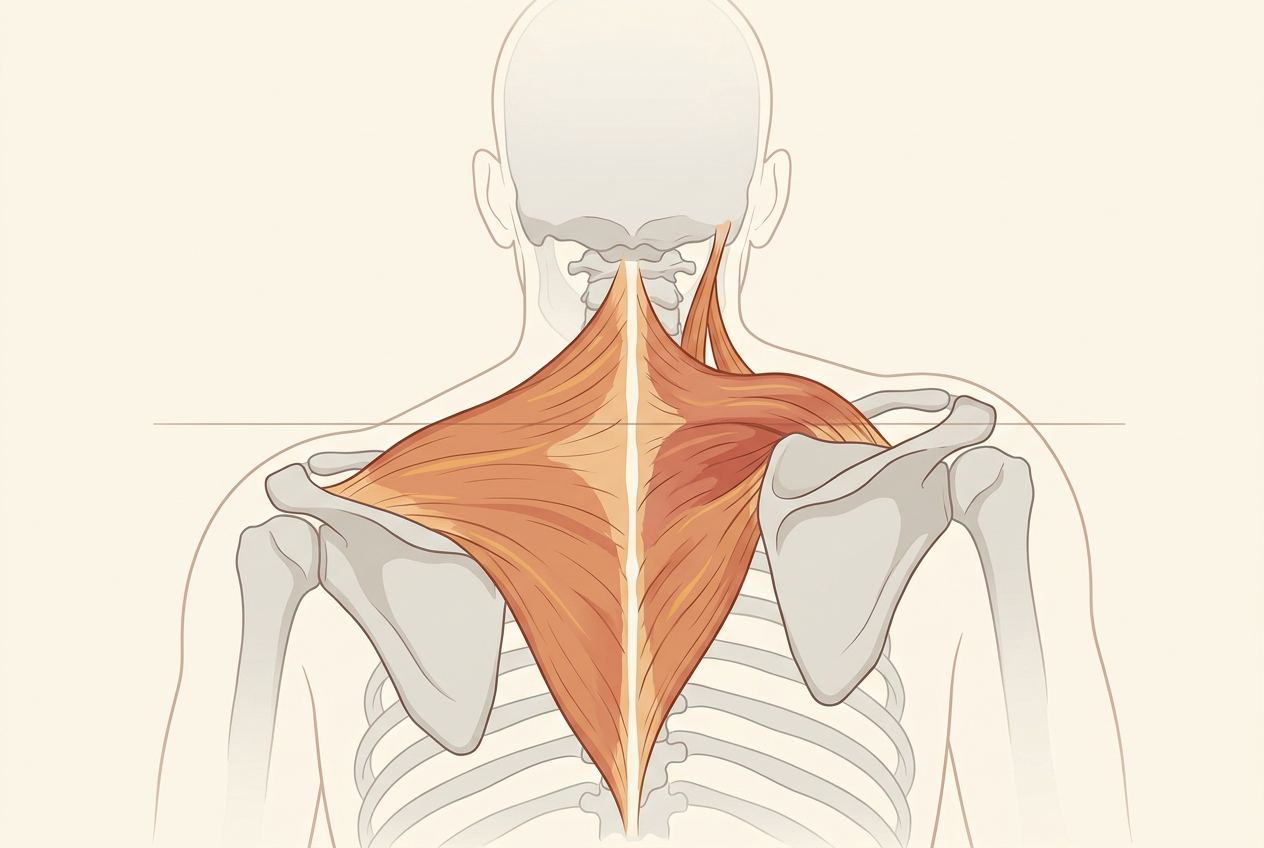
The shoulder is not stacked bone. The collarbone and the shoulder blade essentially hang from muscle, and where they hang is decided by whichever muscles are pulling hardest at that moment. Two of them do the pulling upward: the upper trapezius, which runs from the base of the skull out along the top of the shoulder, and the levator scapulae, whose name is the job description.
Both are built for short bursts, not for a low-level contraction that never fully switches off. When that contraction becomes the resting state, the shoulder settles higher and stops registering as a position at all. It reads as her shape.
- A shoulder bag carried on the same side every day
- A phone or tablet held at chest height for long stretches
- Sleeping curled onto the same shoulder night after night
- Bracing against cold, which recruits the traps before anything else
- A screen set slightly too low, so the shoulders creep to compensate
That distinction is the whole reframe. A build cannot be changed, but a holding pattern is a muscle actively doing something, and a muscle can be given a different instruction. Warmth plus a contraction it did not initiate is that instruction, which is exactly what the SculptWave delivers through gentle heat and EMS microcurrents that contract and release the muscle from inside.
Why an Excellent Hour of Bodywork Wears Off by Thursday
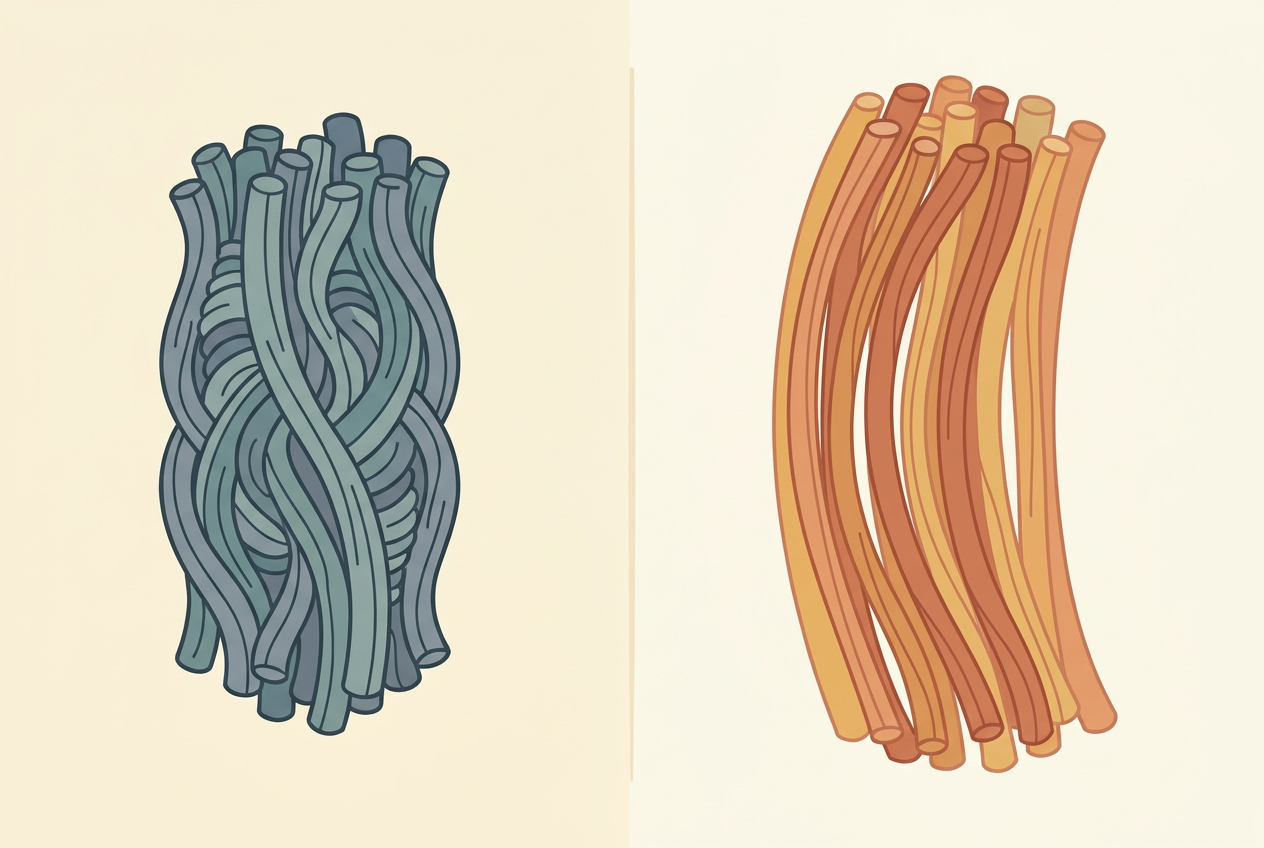
Professional bodywork is not the problem, and the women who have been managing this for years rarely say it did not work. They say it does not stay. Mechanically, that is exactly what should happen: a skilled pair of hands changes tone during the session, but no hour can change the hundred and sixty hours between sessions.
Muscle tone is an instruction the nervous system keeps reissuing, and it writes that instruction from whatever the body does all day. Two weeks of the desk, the bag and the cold will quietly rewrite what one hour undid.
There is a second mechanism, and it is the one that ruins morning stretching. A cold, guarded muscle does not release. Pull on a trapezius at 6am and most of the length comes out of the tendon at either end while the belly of the muscle stays as it was.
Warmth is not a comfort step before the real work, it is the precondition for any of it. That is why the SculptWave leads with heat, softening guarded tissue first so the soothing vibration and the EMS pulses that follow are working on a muscle that can actually let go, on the days between appointments rather than only during them.
Why the Same Shoulders Got Noticeably Tighter After Fifty
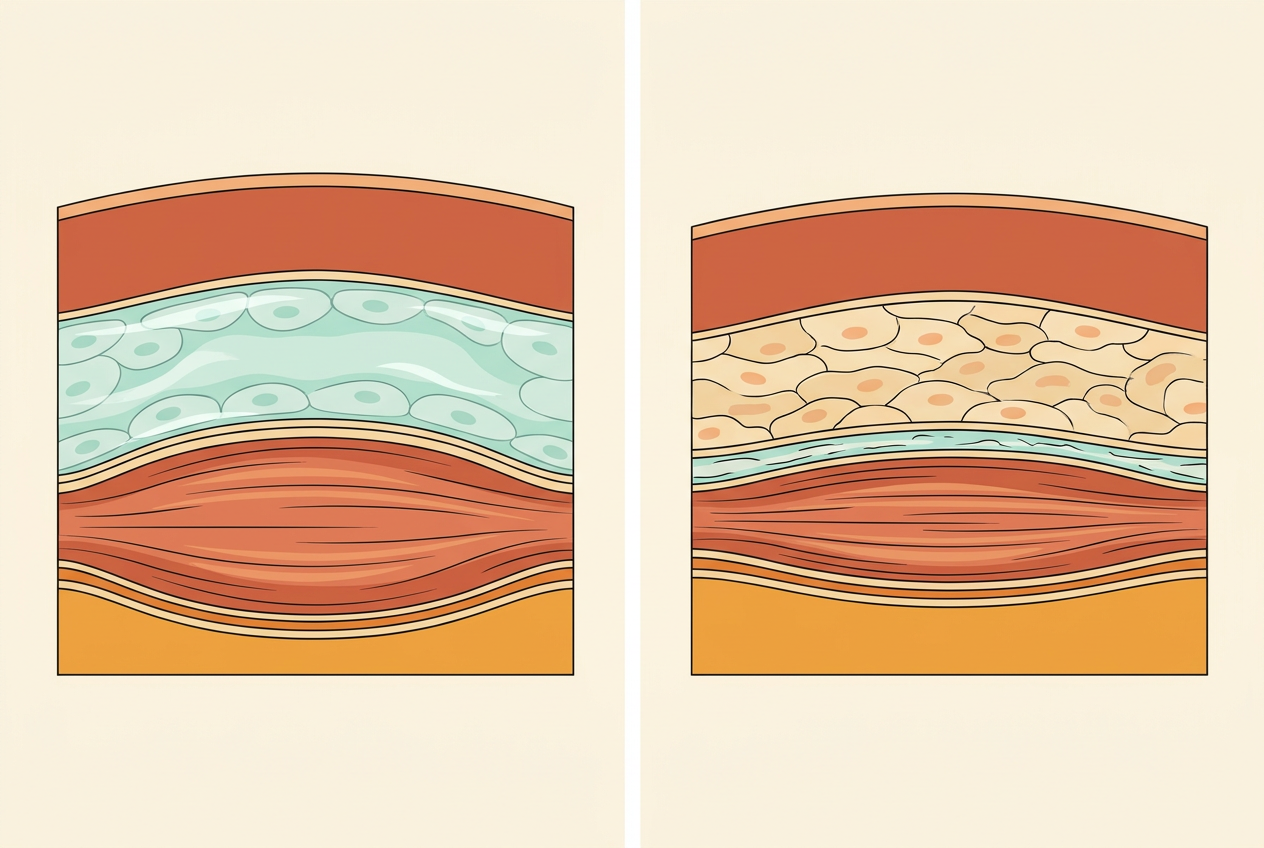
Plenty of women find hormones are a genuine part of this picture, and that conversation belongs with their own clinician rather than with an article. What almost nobody explains is what is happening in the tissue alongside it.
Fascia, the collagen-rich sheet that wraps and separates every muscle, depends on water content to glide. As estrogen declines that tissue holds less water and moves against itself less freely. The holding pattern has not changed, the material it is happening in has.
Drainage compounds it, because lymph has no heart. It moves by muscle contraction and pressure, so a shoulder that is held rather than moved also clears slowly, which is why the area can feel thick and heavy as well as tight.
Tissue in that state needs warming before anything works it, and it needs contraction it is not producing on its own. The SculptWave brings both to the same ten minutes: heat to soften the fascia, a contoured edge to work along it, and EMS pulses that contract and release the muscle in a way that helps release fascial tension and supports the lymphatic flow a held shoulder has been going without.

What It Actually Takes to Get a Trapezius to Let Go
A session works because things happen in a particular order, and skipping the order is why single-modality tools plateau. Warm the tissue first. Work it directionally, along the slope of the trapezius and in toward the collarbone and the base of the neck where the drainage clusters sit. Then get the muscle itself to contract and release from the inside, which is the part stretching cannot reach.
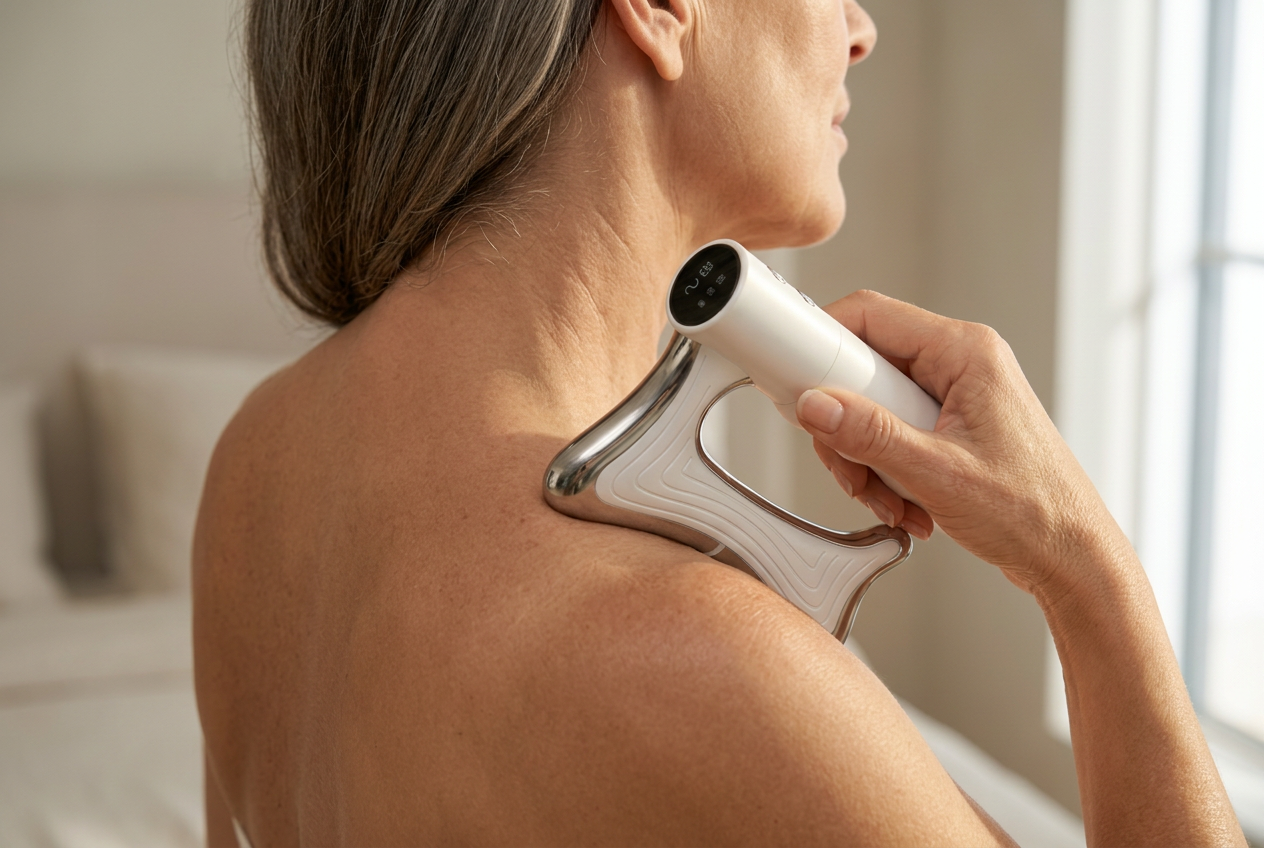
Shape decides whether any of that reaches the muscle. The top of the shoulder is a slope, not a plane, so a flat tool or a round percussion head bridges across it and makes contact at two points. A contoured edge sits into the slope and stays in contact along the whole line of the fibre.
That sequence is what the SculptWave was built around. Gentle warmth to soften, soothing vibration through the surface, EMS microcurrents that contract and release the muscle the way a rehab unit does, and a contoured edge that follows the shoulder instead of pressing across it.
A Resting Position Changes by Repetition, Not by Force
The familiar pattern is shoulders that come down during a session and are back up by Thursday afternoon. That is not the tissue refusing. Resting tone is not a switch that gets flipped, it is a setting the nervous system re-decides continuously from recent history.
Which means the variable that matters is how often the tissue gets a different signal, not how hard any one session goes at it. A muscle that is warmed and made to contract and release on a regular schedule is gradually recruited less to guard. Force applied once a month cannot compete with a mild signal delivered most evenings.

Ten minutes on each shoulder is small enough to repeat, which is the entire point of putting heat, vibration and EMS in one handheld tool she can run on her own trapezius while the news is on. What women report back is correspondingly small and specific: reaching into the top cupboard without planning the movement first, rolling onto that side at night and staying there, noticing at some point in the evening that the shoulders are down and not being able to say when they came down.
Let Your Shoulders Come Back Down
Don't Miss Our Summer Relief Sale. For a limited time, enjoy 55% off the SculptWave Full Body Contouring Device, plus a complimentary 20-page Self-Care Guide with every order.
Check Availability →
What Others Are Saying About SootheSilk
Individual experiences shared by verified customers. Results vary from person to person.
“I did not know my shoulders were up until I felt them come down. Ten minutes on each side after dinner and by the second week my neck stopped aching by 3pm.”
“I had a standing massage every three weeks for eleven years. I still go sometimes, but I am not counting the days until the next one anymore.”
“The heat is what makes it work for me. Without it I may as well be rubbing at a cold shoulder. It took me about three weeks of doing it properly before I noticed much.”
“Reaching up to the top shelf used to be something I braced for. I did it twice this morning without thinking about it.”
“My husband was the one who noticed. He said my shoulders looked lower. I had been doing it every evening while the news was on.”